$10000 Car Loan Even With Bad Credit
By using a mortgage payment calculator, you can find ways to save money, and save big. Now, if you cut corners and reduce frivolous spending, most people realize that they can save that amount, but if things are really tight, you can still send in an extra $50 a month. Either way, you'll save thousands, even tens of thousands of dollars on the life of your loan by following these pointers.
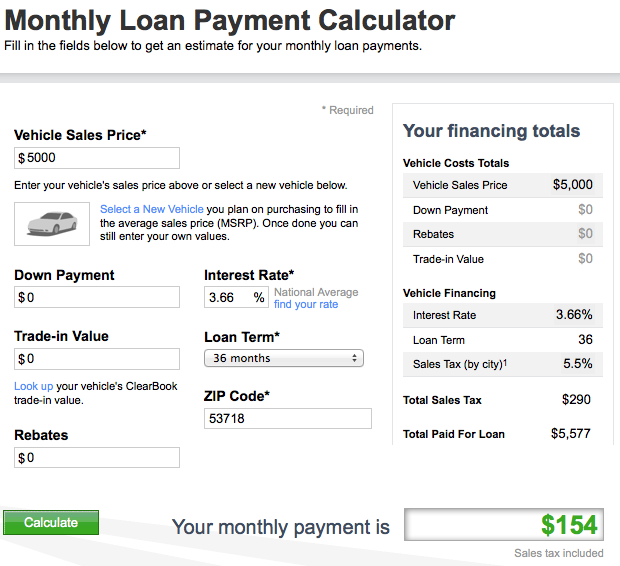
First, you must determine how much you can afford to pay a month including gas and insurance. A good start is to find a website that has a reverse people who buy wrecked cars. This will help you determine the price range you should consider. Insurance costs will most likely increase with a new car. Contact your insurance agent for an estimate after you have narrowed your search. Also, be sure to find out if the new vehicle uses a different grade of gas than your current car.
An advisable option is to have the car checked during the day as the dark can hide certain faults which you might miss. Don't put a time limit on the inspection. Let the mechanic take his time with it. If you have even a small doubt, don't buy the car.
Buying a used car becomes all the more important if you have poor credit history. Lenders often deny new car loan applications of poor credit auto buyers. But, as a used is cheaper, they don't have much problem in offering poor credit used car loans.
If you are fortunate enough, you will be able to find the lease deal that you need. Try to check as many car dealerships as you can for this allows you to obtain more car lease deals that you can compare.
Before you go to the used car dealership, be sure you find out what your credit score is. If it's good, you'll get better interest rate and can negotiate on your loan. Be sure the loan is set up with a finance company or bank before you go too. Most dealerships can offer you a loan but the interest rate tends to be higher. Make sure to visit several dealerships but don't let every one of them run a credit check on you, as it'll hurt your credit rating and make your score go down.
The car's value is tied to the year, mileage, make, performance and popularity of it. If you buy a car that is popular you will pay a premium for it. It is best to check car reports to get the blue book value for a car based on fair, good and excellent condition. Hardly any cars are in the excellent range.
First, you must determine how much you can afford to pay a month including gas and insurance. A good start is to find a website that has a reverse people who buy wrecked cars. This will help you determine the price range you should consider. Insurance costs will most likely increase with a new car. Contact your insurance agent for an estimate after you have narrowed your search. Also, be sure to find out if the new vehicle uses a different grade of gas than your current car.
An advisable option is to have the car checked during the day as the dark can hide certain faults which you might miss. Don't put a time limit on the inspection. Let the mechanic take his time with it. If you have even a small doubt, don't buy the car.
Buying a used car becomes all the more important if you have poor credit history. Lenders often deny new car loan applications of poor credit auto buyers. But, as a used is cheaper, they don't have much problem in offering poor credit used car loans.
If you are fortunate enough, you will be able to find the lease deal that you need. Try to check as many car dealerships as you can for this allows you to obtain more car lease deals that you can compare.
Before you go to the used car dealership, be sure you find out what your credit score is. If it's good, you'll get better interest rate and can negotiate on your loan. Be sure the loan is set up with a finance company or bank before you go too. Most dealerships can offer you a loan but the interest rate tends to be higher. Make sure to visit several dealerships but don't let every one of them run a credit check on you, as it'll hurt your credit rating and make your score go down.
The car's value is tied to the year, mileage, make, performance and popularity of it. If you buy a car that is popular you will pay a premium for it. It is best to check car reports to get the blue book value for a car based on fair, good and excellent condition. Hardly any cars are in the excellent range.